Summit Night on Mount Kinabalu: 2am to Sunrise on Low's Peak
Supper at 1:30am, out of the hut by 2:30, and the last 800 metres of ascent done by head torch on bare granite. The one night everybody asks about, set out by the clock rather than described.
In this guide
- 1:30am: supper in the dark
- 2:30am: leaving Panalaban
- What does the first hour feel like?
- The rope sections above the tree line
- Sayat-Sayat at 3,668 m
- The granite slabs
- Low's Peak at 4,095 m
- How long do you get at the top?
- The descent nobody warns you about
- Back at the hut: brunch and packing
- Timpohon Gate, and the certificate
- What the whole night actually asks of you
1:30am: supper in the dark
Someone wakes the dormitory and you eat a meal your body has no interest in. It is served in the canteen, it is warm, and it is the last food you will see for six hours. Eat it.
You will have laid your layers out the night before if you took any advice at all, because finding a glove in a shared dormitory at half past one in the dark is nobody’s idea of a good start. Head torch on before you leave the room.
2:30am: leaving Panalaban
Out of the hut at 3,272 m into cold air and a queue of head torches. The first thing the mountain does is put you on a staircase: the section immediately above the huts is the steepest ground of the entire climb, and it arrives before you are properly awake.
Your guide sets the pace, and it will feel slow. Let it. Everybody who goes hard in the first twenty minutes pays for it above the checkpoint.
What does the first hour feel like?
Cold, steep and oddly companionable. You are in a line of lights moving up through scrub, close enough to hear other groups but not to see much of them. The stars, on a clear night, are the best of the trip, because you are above most of the weather and there is no light below you at all.
The altitude announces itself somewhere in this hour. Most climbers get a mild headache, some get slightly nauseous, and both usually ease if you slow down and drink.
The rope sections above the tree line
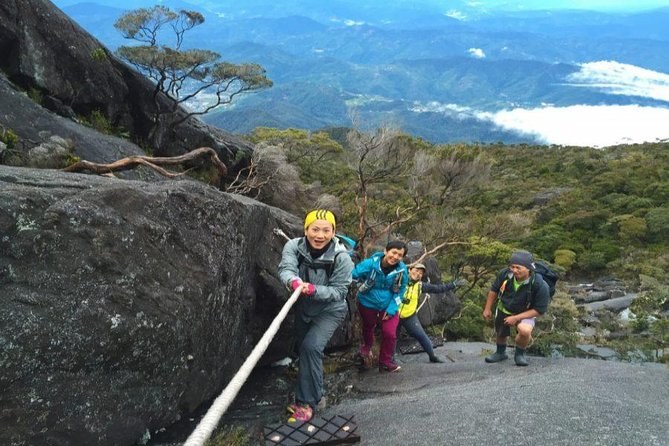
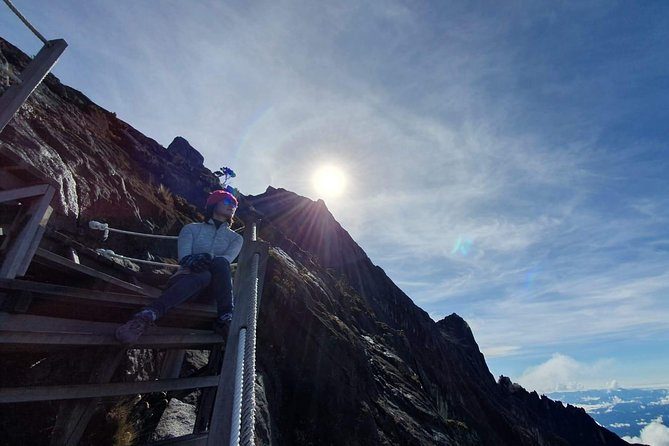
The vegetation thins and then stops, and the trail becomes rock with a fixed white rope running up it. You hold the rope rather than clip to it, and it is there for balance and reassurance more than for arrest.
In the dry this is straightforward. In the wet the granite is genuinely slick and the rope earns its keep. Gloves help here more than anywhere else on the mountain.
Sayat-Sayat at 3,668 m
The last checkpoint before the summit plateau, about an hour above the huts, and every climber signs in. It is a small hut and a register, and it matters for two reasons: it is how the park knows who is above it, and it is where a guide makes the call on a group that is moving too slowly or a sky that has turned.
If you are struggling, say so here rather than higher. Turning back from the checkpoint is a normal outcome, the certificate records how far you got, and the descent from here in daylight is far easier than the descent from the summit on empty legs.
The granite slabs
Above the checkpoint the mountain becomes a single sheet of rock at a gentle angle, polished smooth by glaciers during the last ice age. There is no path in any usual sense: a painted line, a fixed rope, and bare stone underfoot for the best part of an hour.
It is the strangest hour of the climb. Flat enough to walk on, steep enough that you think about it, and completely silent apart from boots and breathing.
Low's Peak at 4,095 m
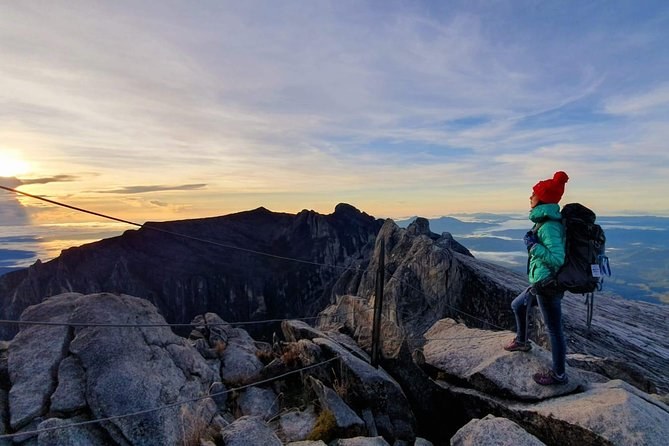
A short scramble at the very end and then a small crowded summit block with a sign on it. You will be one of perhaps a hundred people up there, all of you cold, all of you waiting for the same thing.
Sir Hugh Low reached the plateau below in 1851 and judged this point “inaccessible to any but winged animals”. John Whitehead climbed it in 1888. The rest of that story is worth knowing while you stand on it.
How long do you get at the top?
About twenty minutes to half an hour, in practice. Guides move groups off the summit fairly promptly, partly because of the descent ahead and partly because a hundred people on a small block of granite in the dark is a crowd.
What you see, if the cloud is kind, is the light arriving over Sabah with a sea of cloud below you and the shadow of the mountain thrown out to the west. If it is not kind, you see grey. Both happen, and the second is not rare.
How do you prepare for a 1:30am start?
The evening before decides most of it. You arrive at the huts in the afternoon, and what you do between then and lights out at eight matters more than anything you do at half past one.
Eat the dinner. Altitude blunts appetite exactly when you need the calories, and the classic mistake is skipping a meal you do not fancy and then leaving on empty six hours later. Drink steadily through the afternoon rather than in one go before bed.
Lay everything out before you get into the sleeping bag: base layer, insulation, shell, gloves, hat, head torch, snacks, water. Finding a glove in a shared dormitory in the dark, quietly, is a genuinely miserable way to start.
Then accept that you will sleep badly. Almost nobody sleeps well at 3,272 m in a dormitory before an alarm they are dreading, and the good news is that it matters far less than it feels like it should. Four broken hours is enough for what the mountain asks.
The descent nobody warns you about
You now walk down 8.5 km, having been awake since half past one. The granite comes first, in daylight this time, which makes it easier to see and no easier on the knees. Then the steps, for hours.
This is the part that hurts, and it is why the kit list includes a second pair of shoes and why walking poles earn their weight. Guide overtime after 4pm is charged at MYR 15 per group per hour, so a very slow descent has a price as well as a cost.
Back at the hut: brunch and packing
You return to Panalaban some time in the morning, eat again, collect the things you left, and carry on down. Most climbers are surprised by how little they want to linger: the hut that felt like sanctuary the night before is now simply the halfway point of a long descent.
Can you photograph any of it?
Some of it. Everything before sunrise happens by head torch and phone cameras struggle badly in that light, so the summit shots most people come home with are taken in the twenty minutes after first light rather than during the climb.
Cold flattens batteries fast at that altitude. Keep the phone inside a jacket rather than in an outside pocket, and expect to lose a chunk of charge overnight regardless.
Timpohon Gate, and the certificate
Back through the gate you started from, sign out, and into the transport. The summit certificate is issued at the end, and it records how far you actually got — the summit, or the checkpoint. Both are on it, and both are worth having.
Then two hours of road back to the coast, most of which you will sleep through.
What the whole night actually asks of you
Less skill than people expect and more patience than they plan for. Nothing between the hut and the summit is technical. What the night asks is that you eat when you do not want to, go slowly when you feel fine, hold a rope in the cold, and keep walking for three hours in the dark on four hours of broken sleep.
| Time | Where | Altitude | What happens |
|---|---|---|---|
| 1:30am | Panalaban | 3,272 m | Supper |
| 2:30am | Leaving the hut | 3,272 m | Head torches on, straight into steps |
| about 3:30am | Sayat-Sayat | 3,668 m | Check in; vegetation ends |
| 3:30–5:00am | The granite slabs | 3,700–4,000 m | Fixed rope across open rock |
| about 5:30am | Low's Peak | 4,095 m | Summit, before first light |
| about 6:00am | Leaving the summit | 4,095 m | Descent begins |
| mid-morning | Panalaban | 3,272 m | Brunch, collect bags |
| early afternoon | Timpohon Gate | 1,866 m | Sign out, certificate |
The summit-night timetable as the operators publish it. Times shift by up to half an hour depending on the group and the weather.
See every Mount Kinabalu climb
Every guided climb here runs that night. What differs is what you get either side of it, and that is set out across Mount Kinabalu booking.
Frequently asked questions
Why does everyone summit before dawn?
Because the mountain is clearest then. Cloud builds on the plateau through the morning, and by noon the view you walked all night for has usually gone.
How cold is it?
Cold enough for gloves, a hat and a windproof layer. The hour before sunrise at 4,095 m is the coldest of the day, and you will be moving slowly.
Do I need a head torch or is a phone enough?
A head torch. Both hands are busy on the fixed rope, and a phone battery in the cold is not something to stake three hours of darkness on.
What if I cannot keep up?
Your guide will slow the group or turn you round at the checkpoint. Neither is a failure, and the certificate records how far you got.
Is there anywhere to stop above the huts?
Not really. There is no water and no shelter above Panalaban, which is why you carry what you need and why the ascent is done in one push.
How long from the hut to the summit?
Two to three hours for most groups. That is why the alarm goes at half past one and you are out of the door at half past two, which gets you onto the summit before the light.
Climbs that run this night — and the rest of the planning sits on visiting Mount Kinabalu, the climb itself and the month to pick. Compare every option on Mount Kinabalu Tours.
Climbs that run this night
Both put you on the summit before dawn. One gives you a night to arrive on first.